
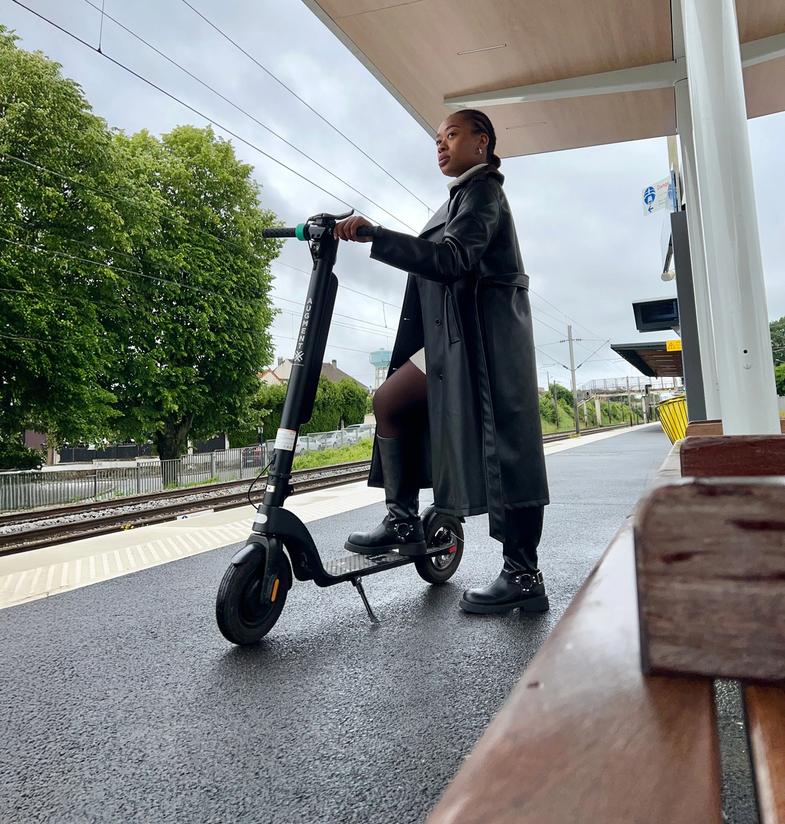
E-Scooters on Public Transport: Vienna & ÖBB

Sebastian
Published on (Updated on )Taking Them on Board in Vienna and with ÖBB
Many people don’t use e-scooters as a replacement for public transport, but as a complement. The scooter closes the gap between home and the station — or between the train station and the final destination. For this to work smoothly, taking it on board needs to be simple.
Foldability Is the Key Everyday Advantage
A scooter that folds quickly is much easier to handle on public transport. It takes up less space, causes fewer disruptions, and can be controlled more easily in many situations. This is especially important during rush hour to ensure no one is obstructed or put at risk.
What to Check Before You Ride
Rules for bringing e-scooters on board may vary depending on the operator. A simple routine helps:
- Fold the scooter before boarding.
- Don’t block pathways, especially near doors and aisles.
- Don’t let the scooter roll — hold it securely.
- If the vehicle is crowded, wait for the next one instead of pushing in.
Practical for Commuters: Charging Has to Fit Your Day
If you ride daily, you’ll often charge at work or at home. A removable battery is helpful here because you can charge it separately — without carrying the entire scooter upstairs or bringing it into your living space.
The key point is simple: an e-scooter is truly practical when it fits your routes. For many people, that means it’s easy to combine with public transport, quick to store, and predictable in range.